The Court Did Not Kill Trump's $1.8 Billion Fund. It Forced the Administration to Say So Under Oath.
Judge Leonie Brinkema's June 12 order did more than freeze Trump's anti-weaponization fund. It turned the real issue into a sworn-paperwork test: if the administration says the program is dead, it now has to prove that in writing and reverse any hidden setup work.
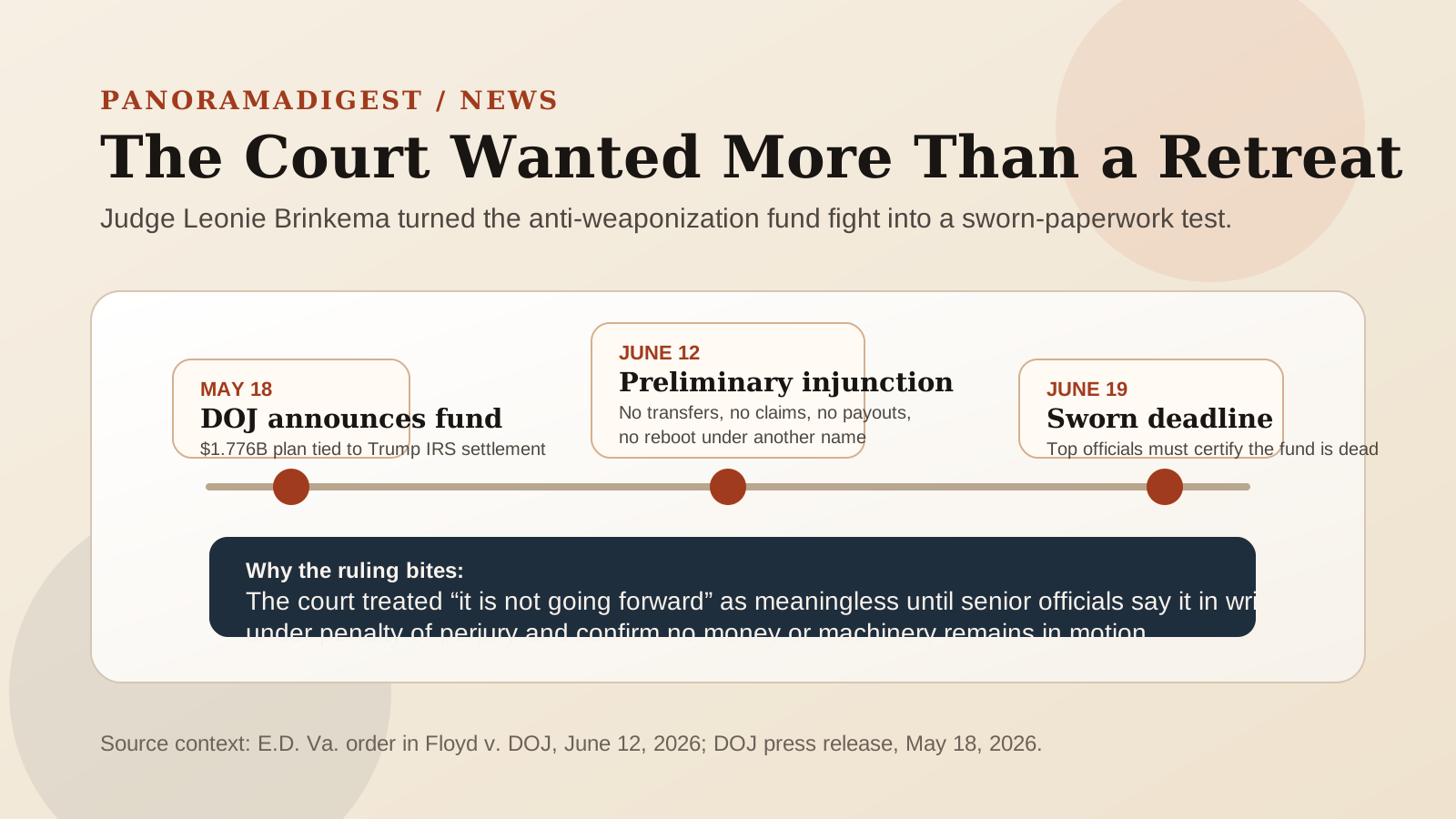
The sharpest line in Friday's ruling against President Donald Trump's anti-weaponization fund was not the injunction itself. Federal judges issue temporary brakes all the time. What made Judge Leonie Brinkema's order more damaging was the standard she chose. The administration had already spent days insisting the nearly $1.8 billion program was effectively over. Brinkema answered that public messaging is not the same thing as a legal commitment. If the fund is truly dead, she said, the officials who control it now have to say so under penalty of perjury.
Video Link
Reuters on the court order blocking Trump's anti-weaponization fund
This provider does not render reliably inside PanoramaDigest. Open it directly on Reuters.
Watch on ReutersReuters — Reuters on the court order blocking Trump's anti-weaponization fund
Reuters' June 12 post tracks the order extending the block on the fund. Use the direct X link if the provider does not render inside your browser.
That is why the June 12 order matters beyond the familiar political argument over whether the fund looked like restitution or a patronage machine. In the two-page order filed in Floyd v. Department of Justice, Brinkema required Acting Attorney General Todd Blanche, Associate Attorney General Stanley Woodward Jr. and Treasury Secretary Scott Bessent to file declarations by June 19, 2026, stating that they will not take any action to create or operate the Anti-Weaponization Fund and that it will not proceed under any name. Reuters, in a June 12 report carried by Investing.com, described that deadline as the judge's answer to an administration that wanted the court to treat unsworn assurances as enough.
The judge did not just preserve the pause. She widened it.
Brinkema's order does more than bar new payouts. It blocks the government from taking any action to create or operate the fund while the injunction remains in place. The list is unusually concrete: no transferring money into a fund account, no processing claims, no making payments, no appointing members to run the program, no writing procedures, no destroying records tied to the fund, and no reconstituting it under a different name. If money has already been moved, the order says that transfer must be reversed immediately. A compliance report is due within seven days.
That detail is the real story. Courts often talk about maintaining the status quo. Brinkema spelled out what the status quo means because the administration's position had become too slippery to trust at face value. The Justice Department's earlier public line was that the fund was "not going forward." But as Axios reported on June 12, the judge treated that formulation as incomplete because it still left room for a program that was unofficially paused, politically inconvenient, or quietly parked rather than formally extinguished.
The distinction may sound lawyerly until you put it next to how the fund was introduced. The Justice Department's May 18 press release said the fund would receive $1.776 billion from the judgment fund, that it would hear claims from people who said they had suffered "weaponization and lawfare," and that it could issue apologies and monetary relief. DOJ also said the settlement with Trump and related plaintiffs involved no direct monetary payment to them but would instead create this larger compensation structure. Once a government program is announced in those terms, a court does not have to accept an informal retreat as a substitute for a binding record.
| Administration position | What Brinkema required | Why the difference matters |
|---|---|---|
| The fund is not moving forward. | Named officials must swear under penalty of perjury that it will not proceed in any manner or under any name. | The court is converting a public-relations claim into a statement with legal consequences. |
| No reason to keep litigating if the plan is dormant. | The injunction stays in place unless the declarations are filed and the court is satisfied. | A dormant program can still be revived unless the paper trail closes the gap. |
| The government can manage any wind-down internally. | The order demands confirmation that no money has moved, or that any transfer has been reversed. | The judge is testing not only intent but whether any operational steps have already happened. |
This became a credibility problem before it became a merits decision
That is the part readers should not miss. Friday's order does not finally decide whether the fund violates the Constitution or the Administrative Procedure Act. The litigation is still at the injunction stage. But the court's skepticism tells you where the administration lost ground first: credibility. Brinkema wrote that if the required declarations are not filed by June 19, she will issue a scheduling order and require a responsive pleading by July 17. That is a warning that the case can move from a status dispute into a fuller legal fight if the government will not shut the door itself.
Democracy Forward, which represents the plaintiffs, used that point aggressively in its June 12 statement. The group said DOJ had declined to provide evidence supporting its unsworn representations and that plaintiffs had repeatedly sought confirmation about whether any funds had been transferred, claims processed or members appointed. Advocacy rhetoric should always be read as advocacy rhetoric. Even so, the court's order lands on the same pressure point: a program this controversial cannot survive on vague assurances that everyone should simply trust the executive branch to stand down.
The plaintiffs' coalition also explains why the court treated the issue as bigger than one settlement mechanism. The case includes former federal prosecutor Andrew Floyd, professor Jonathan Caravello, the city of New Haven, Common Cause and the National Abortion Federation. Their challenge argues that taxpayer money could be routed into a compensation system with thin oversight and explicitly political incentives. Whether every underlying claim succeeds is a question for later. For now, the court has said the challengers raised enough concern to justify locking the machinery in place while the merits are sorted out.
The larger political lesson is that retreat language is not self-executing
There is a reason this ruling feels more consequential than a standard procedural setback. In Washington, administrations often try to defuse legal or congressional pressure by shifting from launch language to softer language: reviewing, reconsidering, pausing, not currently implementing. Brinkema's order strips away the usefulness of that maneuver. She effectively told the administration that if it wants the case to dissolve, it must do more than change the message. It must create a sworn record, unwind any operational steps and submit a status report that can be checked later.
That makes this a more durable blow than a bad headline. It also fits a broader Friday pattern for the administration, which was already dealing with legal compliance questions in other fights, including the separate Kennedy Center name dispute that PanoramaDigest covered earlier in this June 12 analysis. Courts do not always stop an executive project because they dislike its politics. But they become much harder to satisfy when the government wants deference without documentation.
What readers should watch next is simple. By June 19, the three named officials either file the declarations and tell the court, clearly and personally, that the Anti-Weaponization Fund will not proceed, or they do not. If they do, the administration has effectively admitted that the only way out was to formalize the retreat. If they do not, the case moves forward with the injunction intact and with the court already signaling that rhetoric alone will not rescue the program. Either way, the most revealing fact from Friday is no longer that the fund was blocked. It is that the court decided a block was not enough without sworn proof that the machinery had really stopped.
Read Next
Related Stories
Kennedy Center Appeals Naming Ruling: Congressional Authority and Compliance
The Kennedy Center's board asked on June 11 to pause a court order stripping Donald Trump's name from the building, turning a branding fight into a sharper test of who really controls a national arts institution.
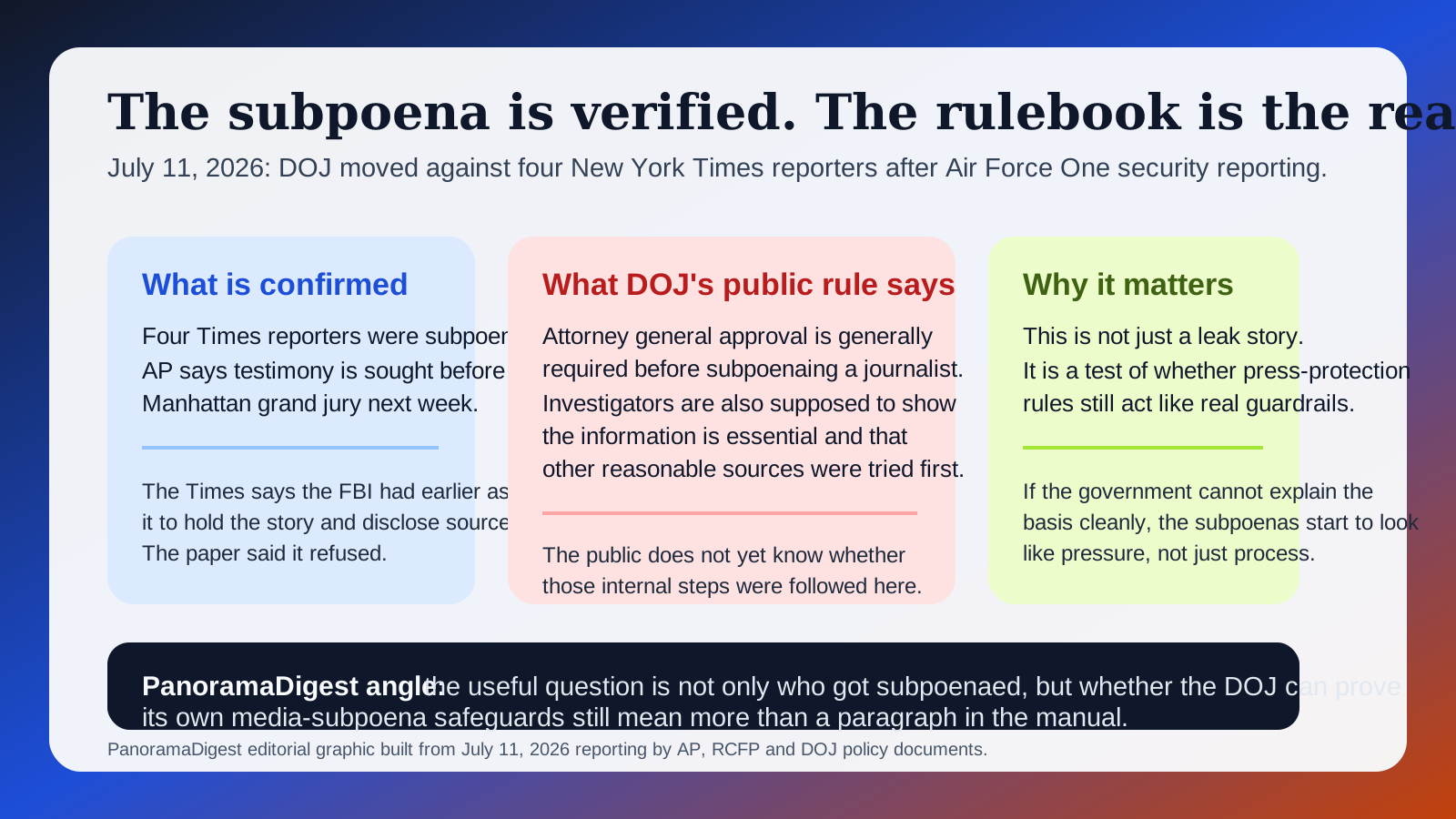
Justice Department Subpoenas New York Times Reporters Over Air Force One Story
The Justice Department has subpoenaed four New York Times reporters over Air Force One security reporting. The more useful question now is what the department's own media-subpoena rules require before prosecutors can force journalists to testify.
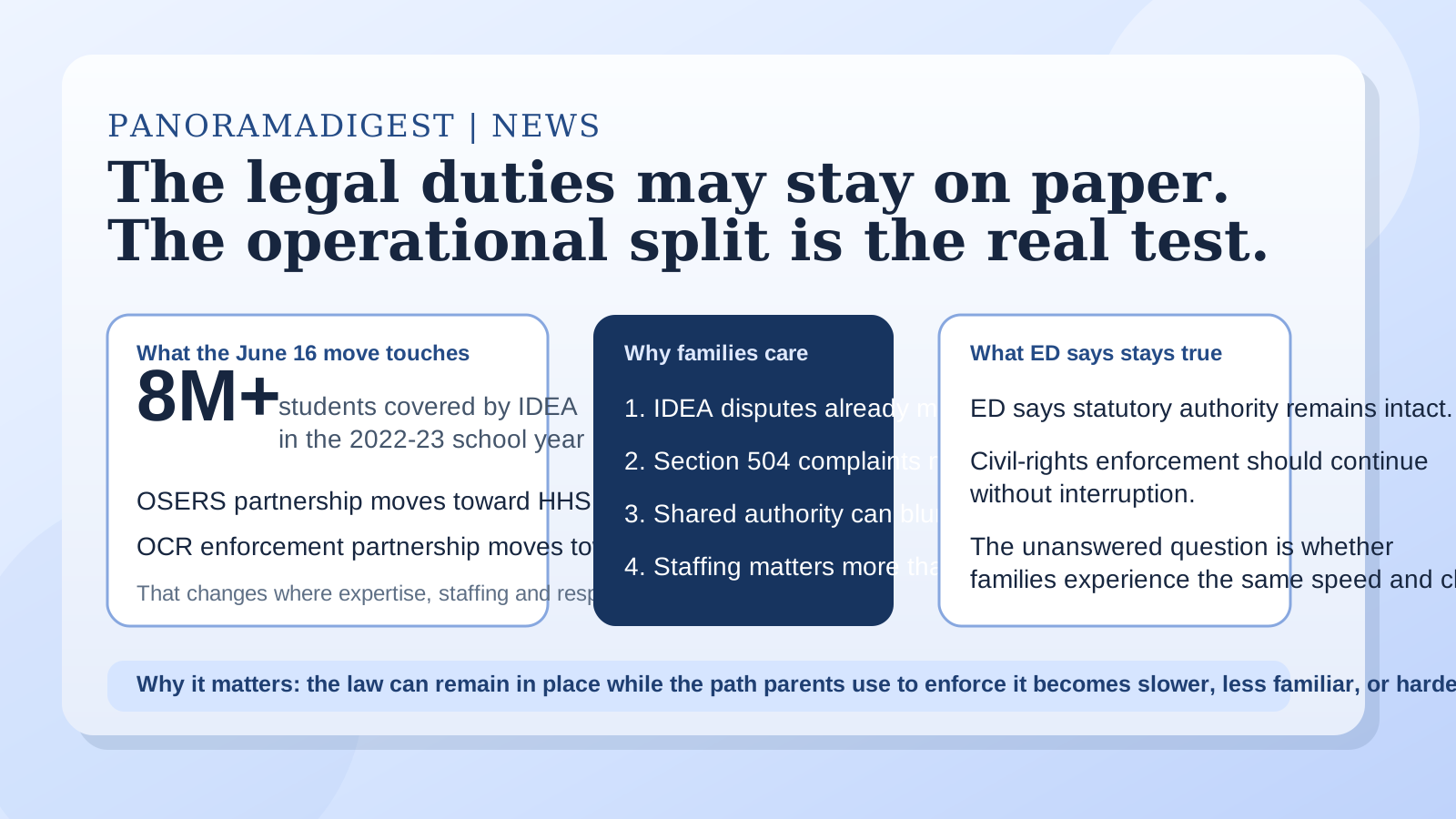
Trump's Education Reshuffle Tests Whether Disability Rights Can Survive a Bureaucratic Split
The Trump administration says June 16's Education Department partnerships will preserve civil-rights and disability protections. The real question is whether families will still find the same expertise, speed and accountability when the work is scattered across agencies.