Kilauea Episode 55: End Time, Alert Downgrade and Remaining Hazards
Episode 55 stopped at 9:03 a.m. HST on October 17. A checked timeline separates the fountains, the later alert downgrade and hazards that remain.
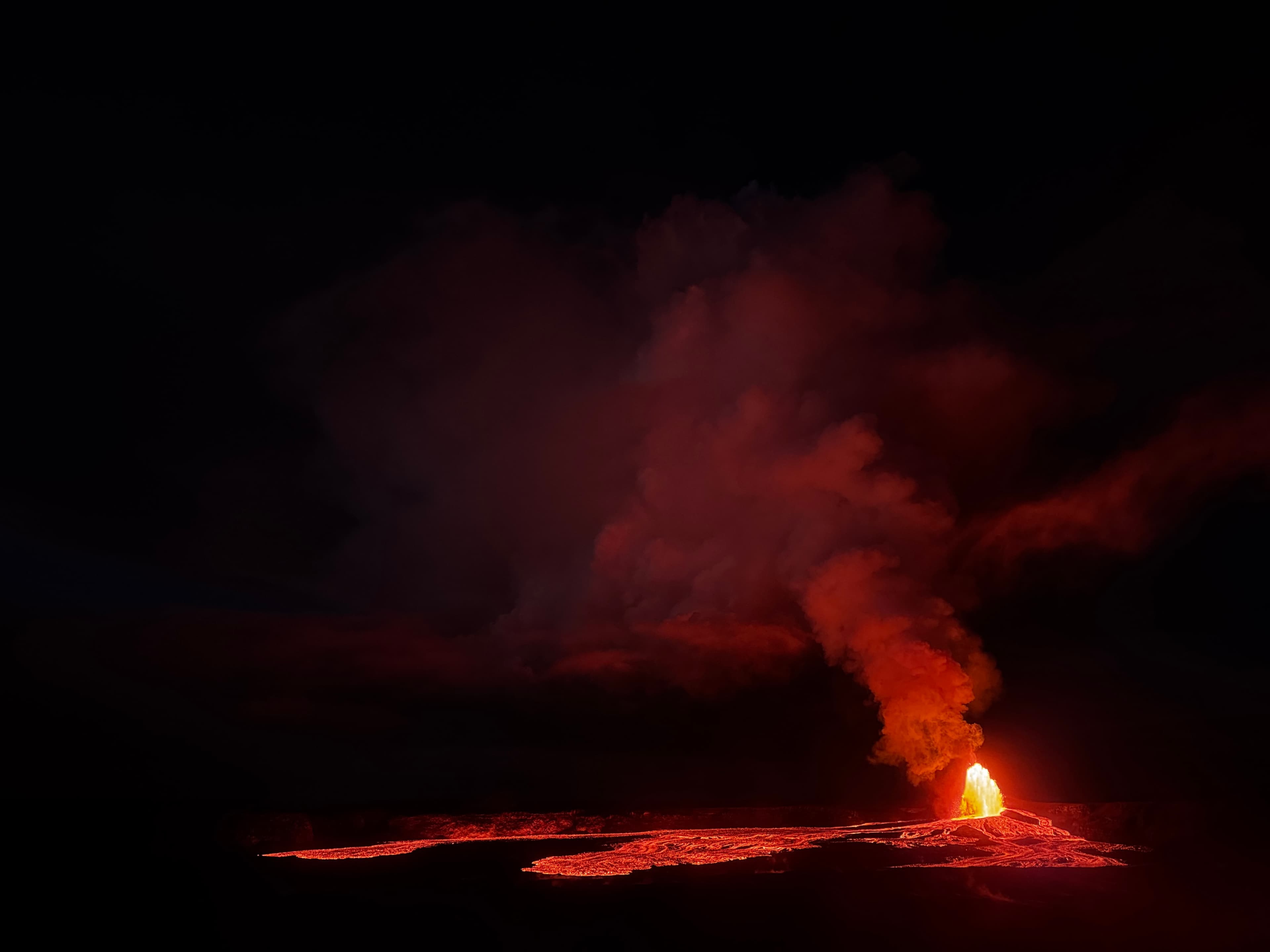
Kilauea's episode 55 lava fountains stopped at 9:03 a.m. Hawaiian Standard Time on October 17, 2026. They had begun at 3:19 a.m., making the fountaining interval 5 hours and 44 minutes. At 9:59 a.m., the Hawaiian Volcano Observatory lowered the volcano alert from WATCH to ADVISORY and the aviation color code from ORANGE to YELLOW.
YouTube — Official USGS V1cam: Kilauea summit live view
Live USGS view of western Halemaumau from the northwest rim. This is a changing monitoring feed, not an archived replay of episode 55. Weather and camera direction affect visibility; use the direct-watch link if playback is blocked.
That is the sequence in the observatory's October 17 notices, including its 9:59 a.m. update, checked on October 18. The fountains had ended; the hazards had not all disappeared. Lava activity remained inside Halemaumau crater in Hawaii Volcanoes National Park, while gas and wind-blown volcanic fragments could still affect areas downwind.
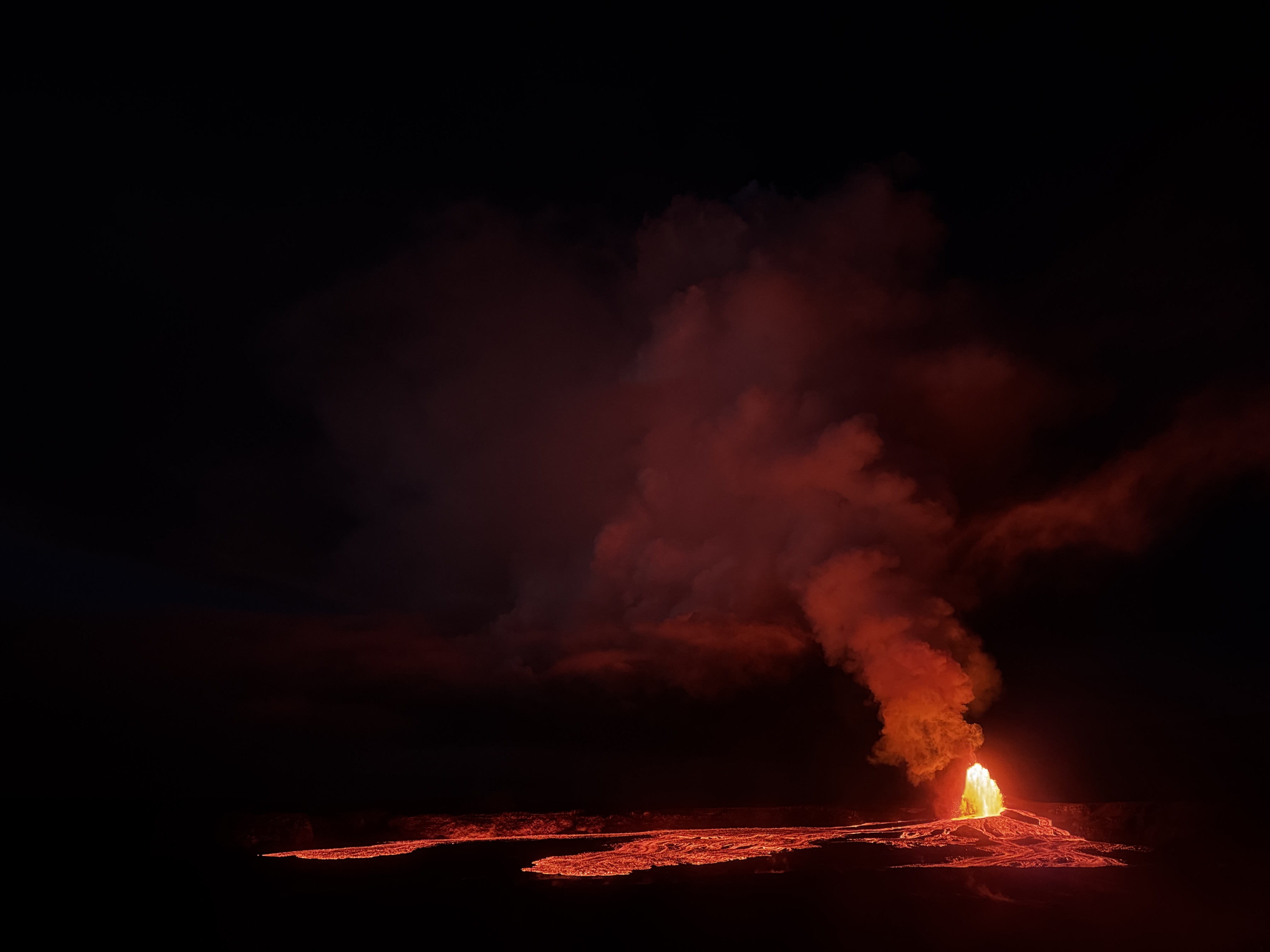
Five times that separate the eruption from the notices
A report's publication time is not necessarily the time a physical event occurred. Here, the difference is only minutes, but it changes the duration calculation. Subtracting 3:19 from 9:03 gives 344 minutes, consistent with the observatory's description of just under six hours. Using the first end-of-episode notice's 9:11 a.m. issue time would overstate that interval.
- 3:19 a.m. HST: North-vent fountaining begins on October 17.
- About 5 a.m.: The north fountain reaches approximately 720 feet (220 meters). The 5:22 a.m. notice reports this observation.
- 9:03 a.m.: Episode 55 fountaining stops abruptly.
- 9:11 a.m.: The observatory issues its end-of-episode notice, still showing WATCH/ORANGE.
- 9:59 a.m.: A subsequent notice lowers the designations to ADVISORY/YELLOW.
Big Island Now's updated local account also records the 3:19 a.m. start and 9:03 a.m. finish. These times describe this episode, not a schedule for the next one.
A 720-foot fountain is not a 25,000-foot ash column
The morning reports contained two very different height measurements. Keeping the reference points attached to the numbers prevents a dramatic but misleading comparison.
| Observation | Reported height | How to read it |
|---|---|---|
| North-vent lava fountain | Approximately 720 feet, or 220 meters | Height of the fountain, not the elevation of its top above the ocean |
| Eruptive plume | About 25,000 feet above sea level | An altitude referenced to sea level, not a 25,000-foot lava jet |
| Significant tephra detected by radar | Up to about 8,000 feet above sea level | The notice did not describe the whole visible plume as a dense ash cloud |
Those are reported estimates for the morning's activity, not a new measurement made by this publication. They are not a forecast of later plume conditions. USGS's eruption-information page also cautions that its rapid public-information estimates are preliminary and subject to revision.
ADVISORY is below WATCH, not an all-clear
The USGS alert definitions distinguish two audiences: named alert levels describe volcano conditions for people on the ground, while aviation colors concern airborne ash hazards. After a downgrade, ADVISORY can mean activity has decreased significantly but remains under close monitoring for a renewed increase. It is not the same designation as NORMAL.
HVO's post-episode warning identifies hazards that a quiet-looking camera image cannot rule out. Sulfur dioxide can contribute to vog, or volcanic air pollution. Wind can lift small glassy fragments left by the eruption. Hot lava may move slowly after fountaining, and unstable crater walls can produce rockfalls. Staying out of closed areas remains important even when the most visible activity has stopped.
The useful distinction is between a volcano's status and permission to enter a particular place. Follow the National Park Service's conditions and closure information, alongside the latest HVO notice, before visiting. A lower alert does not itself reopen a trail or overlook. Our public-safety coverage follows that broader gap between a warning and the decisions people need to make.
Watch the summit without mistaking the feed for a forecast
The embedded USGS V1cam looks into the western part of Halemaumau from the northwest rim. It is a live monitoring view, not an edited replay of episode 55. Weather, darkness and changes in the camera's aim can affect what is visible. Neither a glow nor an apparently quiet scene establishes when another fountain will begin.
If the player does not load, watch the official USGS V1cam on YouTube, or use the observatory's webcam page. For another example of why readers need to distinguish an observed event from the warning issued about it, see our explanation of tsunami alerts and emergency communication after the Mindanao earthquake. Its earthquake and tsunami warnings are a different system, not a guide to interpreting Kilauea's volcano levels.
Read Next
Related Stories
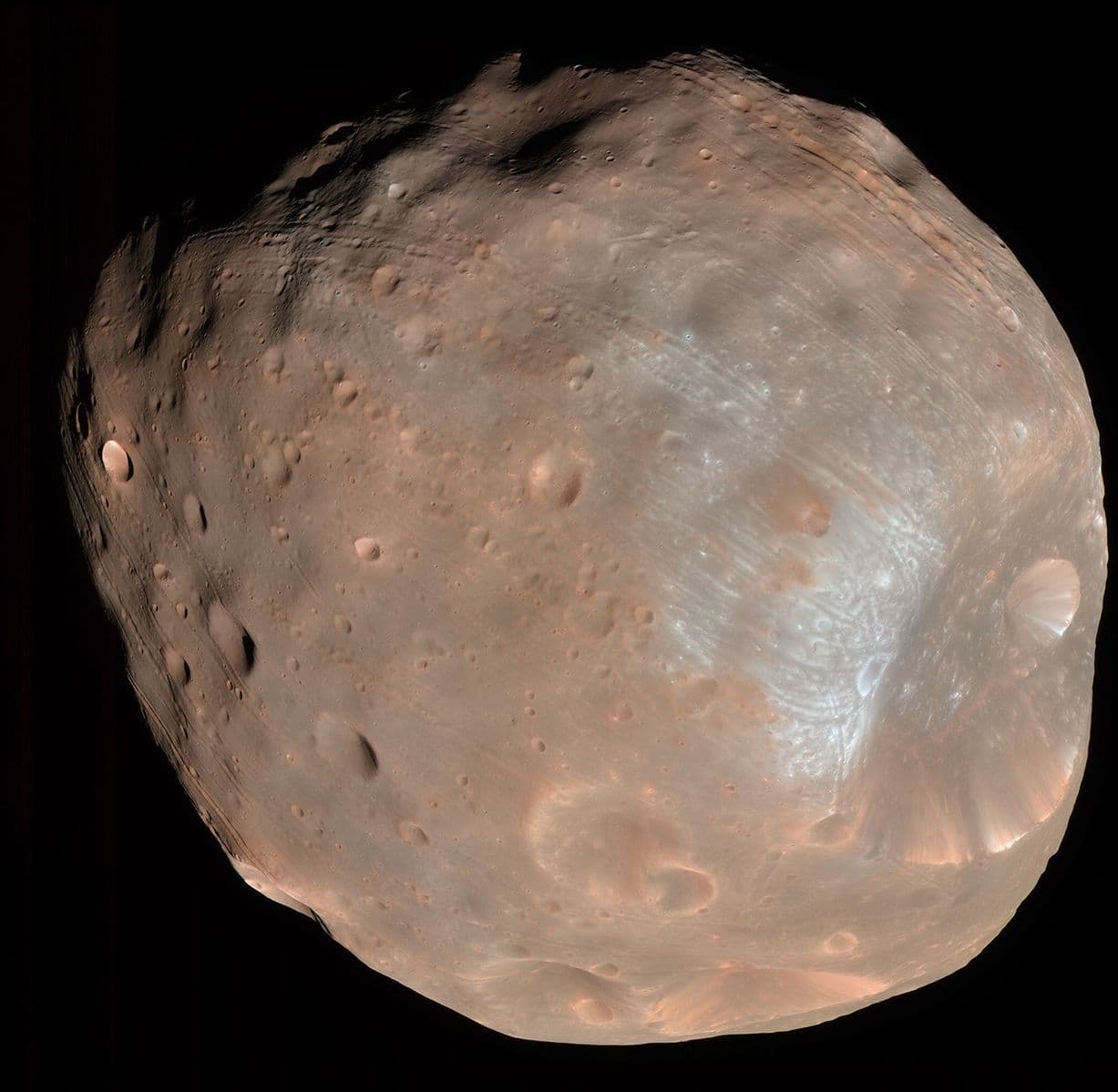
MMX Launch Date and Time: Japan's Phobos Sample-Return Timeline
Japan's MMX mission targets October 20 in Japan, October 19 in Europe and America. A time-zone guide and mission timeline explain the Phobos sample-return plan.
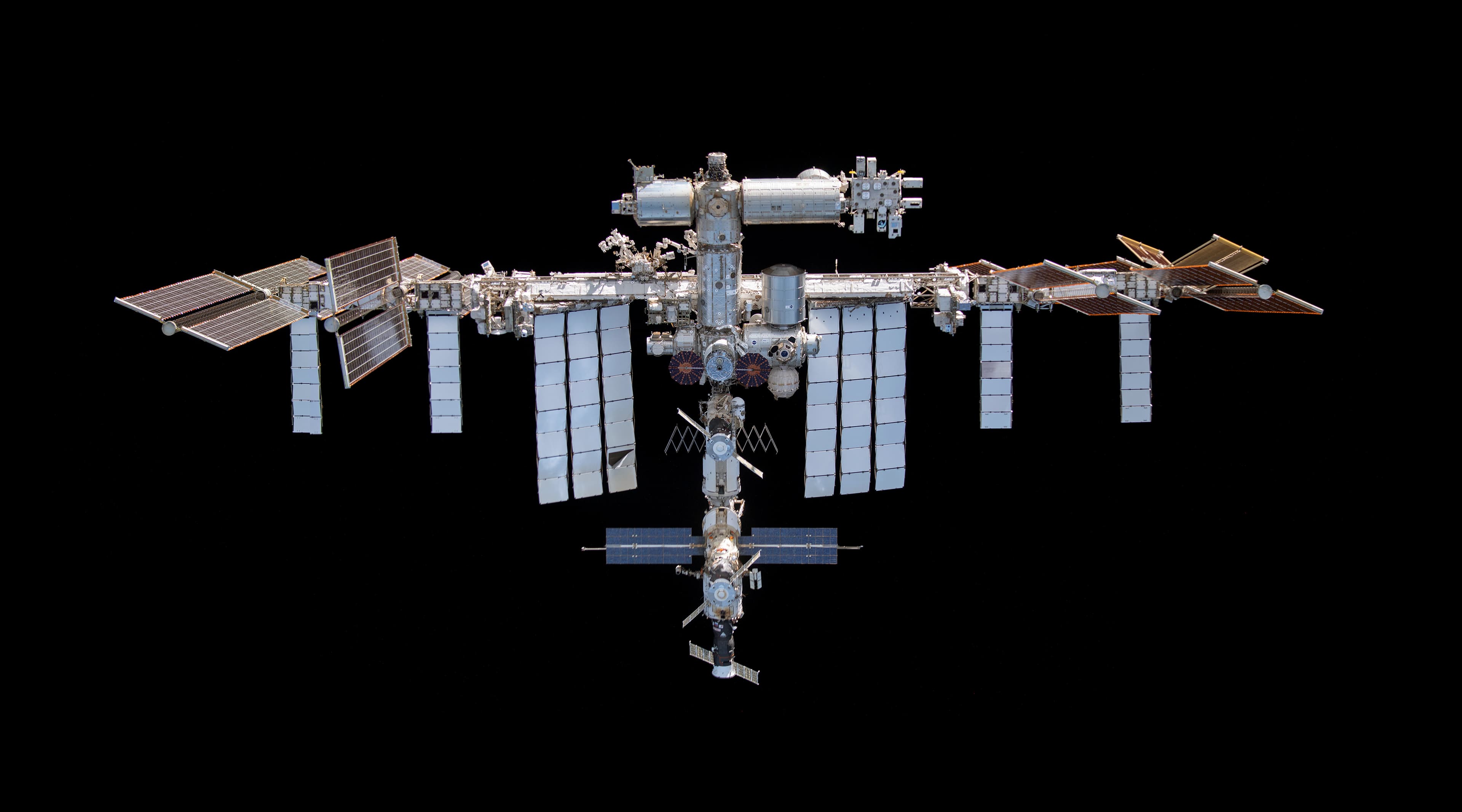
NASA's Commercial Space Station RFP: December 8 Deadline and the ISS Transition
NASA has opened its final competition for commercial space stations. A dated milestone guide separates the bidding deadline from contract awards, crew certification and the ISS retirement decision.

OpenAI DNS Incident: The Gap Between an Alert and Stopping a Run
OpenAI's September incident report separates a network-control failure from a delayed shutdown. Its timestamps show why detection and containment need different measures.