MMX Launch Date and Time: Japan's Phobos Sample-Return Timeline
Japan's MMX mission targets October 20 in Japan, October 19 in Europe and America. A time-zone guide and mission timeline explain the Phobos sample-return plan.
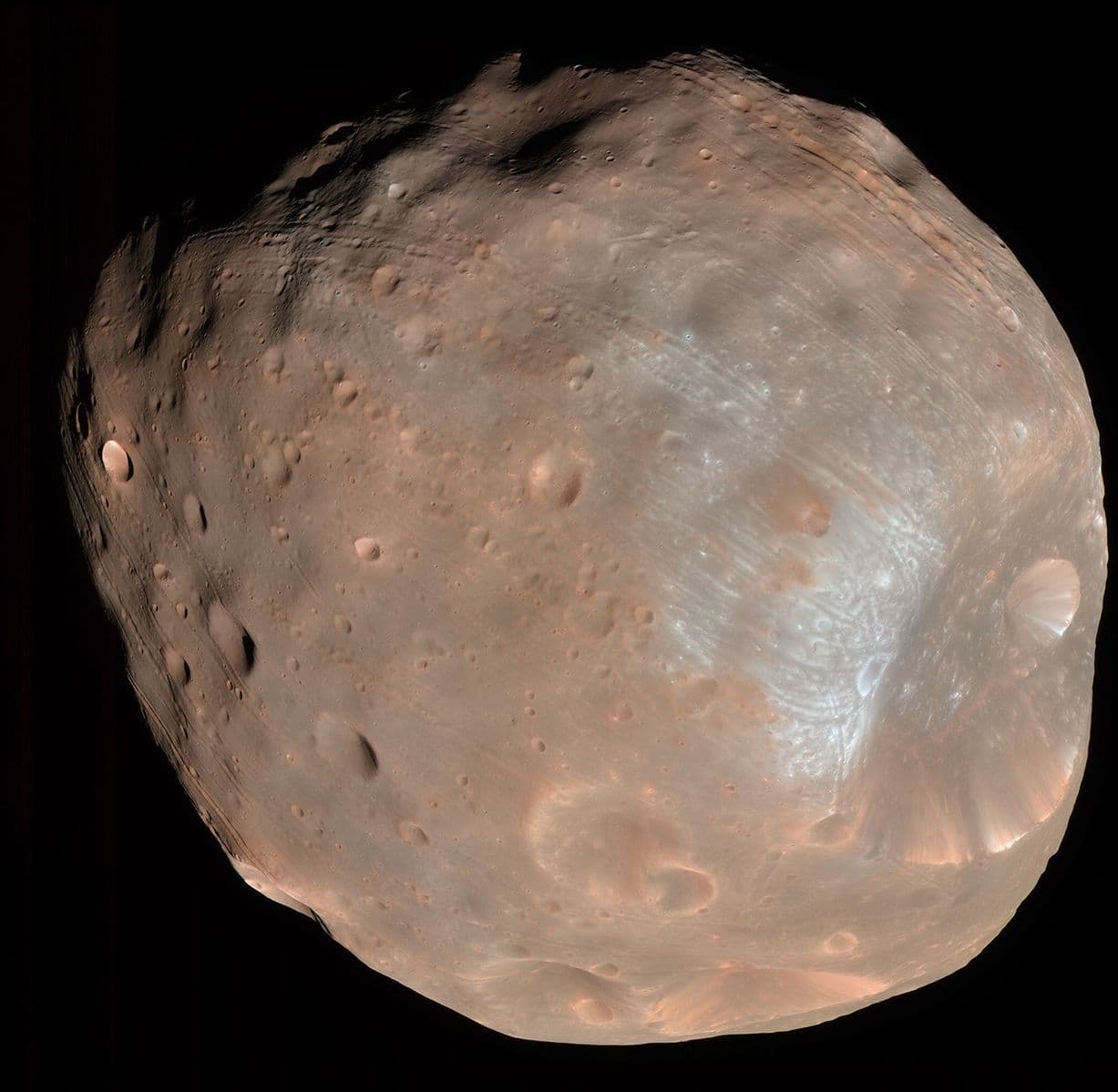
Japan's MMX mission is scheduled to launch at 04:41:03 Japan Standard Time on October 20, 2026, equivalent to 19:41:03 UTC on October 19. The destination is Phobos, a moon of Mars, and the goal is to bring material back to Earth in 2031. Those dates are targets, not completed milestones. The Japan Aerospace Exploration Agency's mission site provides the launch time; its launch coverage page is the place to recheck it before watching.
YouTube — JAXA: MMX Journey to Phobos animation
Mission animation linked by JAXA, showing the MMX journey concept. This is not footage of a completed flight; use the current agency schedule linked in the article for launch and sampling dates.
Why MMX has two launch dates in the headlines
October 19 and October 20 describe the same planned liftoff from Tanegashima Space Center, not separate attempts. Japan is nine hours ahead of UTC. Converting the announced Japanese time gives the following viewing schedule.
| Time zone | Local date | Scheduled time |
|---|---|---|
| Japan Standard Time, UTC+9 | October 20, 2026 | 04:41:03 |
| UTC | October 19, 2026 | 19:41:03 |
| US Eastern Daylight Time, UTC-4 | October 19, 2026 | 15:41:03 |
| Bucharest, Eastern European Summer Time, UTC+3 | October 19, 2026 | 22:41:03 |
The seconds come from JAXA's published schedule, not a prediction that a rocket will leave the pad to that precision. A postponement would supersede every row.
From launch to the 2031 sample capsule
MMX stands for Martian Moons eXploration. JAXA's mission overview sets out an approximately five-year round trip, with observations helping select where to land and collect at least 10 grams of material.
- 2026: depart Japan aboard an H3 rocket.
- 2027: reach the Mars system after roughly a year of travel and begin close observations of Phobos.
- Before departure: deploy a rover, collect material with the main spacecraft and observe Deimos, the other Martian moon.
- 2030: depart the Mars system for Earth.
- 2031: release the sample capsule for atmospheric entry and planned recovery in Australia.
Close observation comes before sampling for a reason: a return mission needs somewhere it can reach safely as well as material worth bringing home. The flight is not simply a courier trip with a predetermined pickup point.
The sampling date is not a December 2028 appointment
NASA's October 15 account places Mars arrival in August 2027 and sample collection no earlier than December 2028. ESA's October 13 preview describes the Idefix rover landing in early 2029 and main-spacecraft sampling in 2030.
These descriptions do not establish a fixed December 2028 landing. An earliest possible date and a later planned milestone can both be true. For readers tracking progress, the useful sequence is arrival, reconnaissance, rover operations, collection and return, rather than treating the earliest boundary as a booking.
What Phobos material could reveal
The origin of Mars's moons remains unresolved. JAXA describes two leading explanations: debris from a large impact on Mars, or asteroids captured by the planet's gravity. Its plan pairs remote measurements with laboratory analysis of returned grains. Pictures reveal shape and surface features; a physical sample permits a different kind of examination. The scientific question is where the material came from, not whether a successful launch alone proves either explanation.
ESA identifies Idefix as a French-German rover developed by CNES and DLR. Its presence also makes an important distinction visible: MMX is a JAXA-led international mission, not a NASA spacecraft merely launching from Japan.
NASA supplies MEGANE, which measures gamma rays and neutrons to infer elemental composition; a pneumatic sampler that uses nitrogen gas to gather surface material; and Deep Space Network communications and navigation support. The pneumatic system complements JAXA's deeper-sampling mechanism. NASA says it will curate about 15% of the returned material at Johnson Space Center in Houston. These are contributions to obtaining and preserving evidence, not a forecast of what that evidence will show.
For another model of Mars exploration, read our report on NASA's Aeolus partnership with Relativity Space, which concerns an atmospheric-science payload rather than Phobos sample return. Our NASA coverage connects the agency's different mission roles without treating them as one programme.
Cover: Phobos photographed on March 23, 2008 by the HiRISE camera on NASA's Mars Reconnaissance Orbiter. Enhanced-color historical image, not an MMX observation. Credit: NASA/JPL-Caltech/University of Arizona. Image and original caption; HiRISE public-domain usage policy.
Read Next
Related Stories
NASA's Commercial Space Station RFP: December 8 Deadline and the ISS Transition
NASA has opened its final competition for commercial space stations. A dated milestone guide separates the bidding deadline from contract awards, crew certification and the ISS retirement decision.

OpenAI DNS Incident: The Gap Between an Alert and Stopping a Run
OpenAI's September incident report separates a network-control failure from a delayed shutdown. Its timestamps show why detection and containment need different measures.

Romania Funds 7 Million Lei Danube Barge Plan to Keep Cernavoda Unit 2 Online
Romania approved a 7 million lei temporary barge intervention at the Bala-Dunarea Veche split to preserve the Danube flow needed by Cernavoda Unit 2.