2027 Social Security COLA: The 3.6% Increase in Dollars and Payment Dates
The 2027 Social Security COLA is 3.6%. Our worked examples separate the gross increase from the bank deposit, with the official calculation and payment timing.
The 2027 Social Security cost-of-living adjustment is 3.6%. It applies to December 2026 benefits paid in January 2027, according to the Social Security Administration's calculation. For an illustrative $2,000 monthly gross benefit, that percentage means about $72 more a month before deductions, not necessarily $72 more in the bank.
YouTube — AARP: Social Security COLA Explained
AARP's August 2025 background explainer on how cost-of-living adjustments work. This is not the announcement of the 2027 rate; the current 3.6% figure comes from SSA's calculation linked above.
That distinction is the useful starting point for a household budget. The announced percentage answers one question: how much the benefit rises. The amount available to spend depends on a second calculation, subtracting deductions from that benefit. Neither figure, by itself, tells you whether your own bills have risen faster.
Turn 3.6% into a monthly dollar estimate
For a planning estimate, multiply your existing monthly gross benefit by 0.036 to find the increase, or by 1.036 to estimate the new gross amount. Use the benefit before deductions, rather than assuming the direct deposit is the same number.
| Starting monthly gross benefit | Monthly increase at 3.6% | Estimated new gross benefit | Increase over 12 months |
|---|---|---|---|
| $1,000 | $36 | $1,036 | $432 |
| $1,500 | $54 | $1,554 | $648 |
| $2,000 | $72 | $2,072 | $864 |
| $2,500 | $90 | $2,590 | $1,080 |
| $3,000 | $108 | $3,108 | $1,296 |
These are our arithmetic examples, not an SSA benefit determination or a table of average payments. Each row holds the starting benefit constant and applies only the announced percentage. Actual benefit calculations and rounding, changes in entitlement and deductions can alter the result. The annual column is 12 times the monthly increase; it is not a separate lump-sum payment.
The same percentage also produces different dollar gains. The $3,000 example receives three times the gross increase of the $1,000 example. Describing a national average increase as everyone's raise would conceal that difference.
Why a larger benefit is not the same as a larger deposit
SSA's explanation of Medicare deductions says amounts withheld from a benefit can include Part B premiums and, where applicable, Part C or Part D premiums. Some higher-income beneficiaries pay higher Part B or Part D premiums. This article does not assume a particular 2027 premium or use a premium forecast as a finalized amount.
Here is a deliberately hypothetical example: a $2,000 gross benefit with $200 in deductions leaves an $1,800 deposit. Applying the COLA gives an estimated $2,072 gross benefit. If deductions stayed at $200, the deposit would be $1,872. If deductions instead rose by $10, the deposit would be $1,862. The benefit increase is $72 in both examples; the spendable increase is $72 in the first and $62 in the second. The $200 and $10 figures are invented solely to demonstrate subtraction, not actual premium amounts.
The price-index calculation behind the rate
SSA uses the Consumer Price Index for Urban Wage Earners and Clerical Workers, or CPI-W. Its published third-quarter averages are 317.265 for 2025 and 328.746 for 2026. The percentage change, rounded to the nearest tenth of one percent, gives the 3.6% COLA.
This is a comparison of July-September averages, not simply the latest month's inflation headline. Nor is it a personalized survey of each recipient's spending. A household whose rent or medical costs change sharply can experience a different squeeze from the one summarized by a broad index. AARP's explanation of inflation and benefits discusses why Medicare premiums and price volatility can dilute the adjustment's short-term impact.
For a different part of the price story, our earlier report on energy costs and producer-price pressures explains the business-side pipeline. Producer prices are not the CPI-W used in this calculation. Our Inflation coverage connects those distinct measures without treating them as interchangeable.
When to check the official notice
Federal Supplemental Security Income payment levels also rise 3.6% for January 2027. Because January 1 is a holiday, that month's SSI payment is made at the end of December 2026. This is separate from the December Social Security benefit paid in January; do not treat the earlier SSI date as an extra month's entitlement.
SSA's COLA information sheet says new benefit explanations become available in the Message Center of personal my Social Security accounts in early December, with mailed notices sent throughout December. Check the actual gross amount, deductions and resulting payment together. Keep the estimate above as a planning worksheet, then replace it with the figures on the official notice.
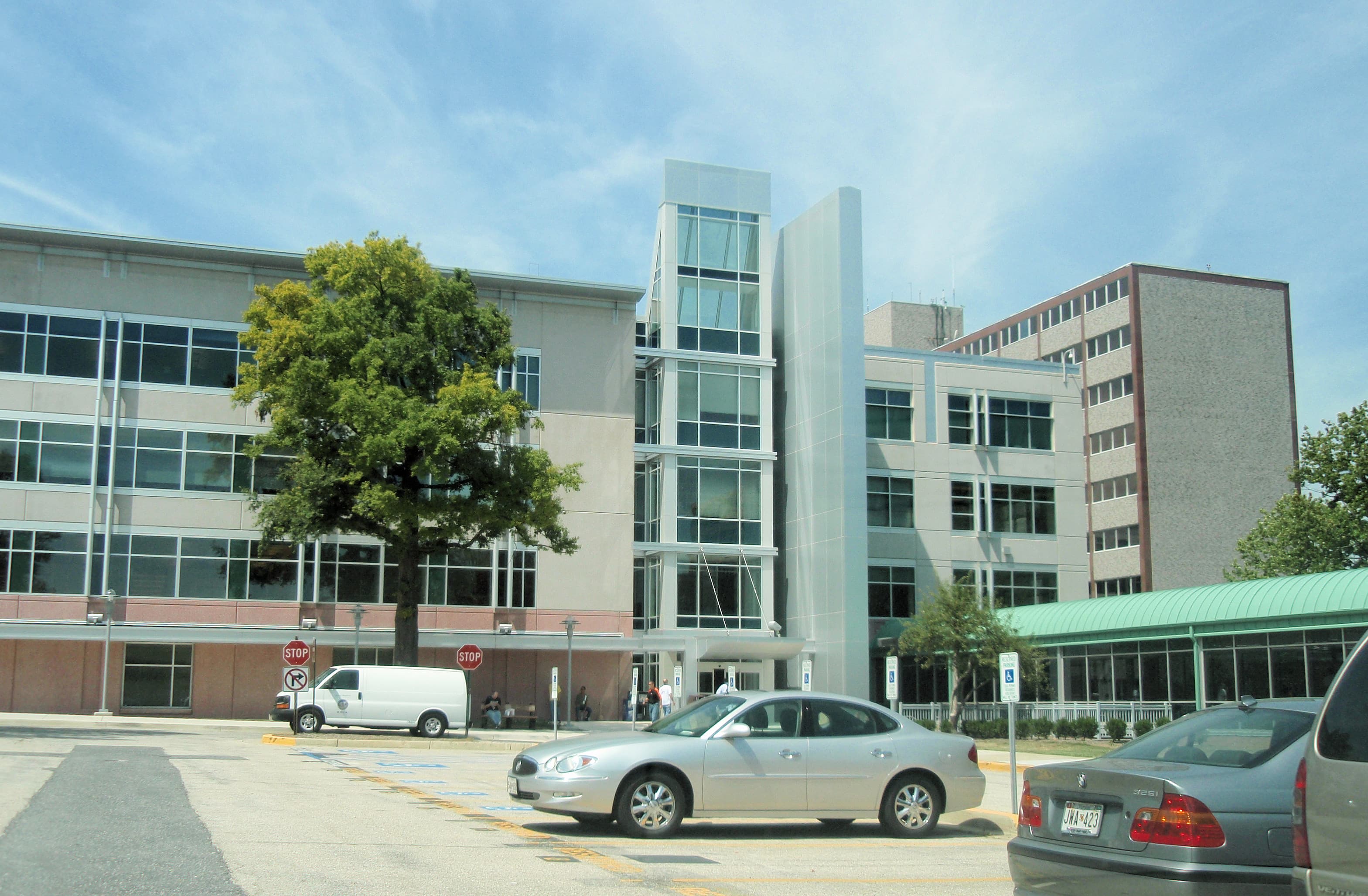
Cover: Social Security Administration headquarters, photographed August 22, 2008 by Coolcaesar. Historical context, not October 2026 event photography. Original photograph, used unchanged under CC BY-SA 3.0.

Read Next
Related Stories

EU Greenwashing Rules Start September 27: How to Check Labels and Guarantees
A practical guide to the EU rules applying from September 27: environmental claims, certification labels, GARAN guarantees and the limits of old-stock flexibility.

U.S.-China $30 Billion Tariff Plan: Goods Covered and Details Still Missing
The White House names goods worth $30 billion in each direction. Neither government's summit summary supplies the product codes, new duty rates or start date needed to calculate shipment-level savings.

U.S. and Japan Buy Yen Together as Dollar Falls From 163 to 156
Japan confirmed coordinated yen buying with the U.S. after the dollar traded above 163 yen. The intervention amount will be disclosed later.