NASA's Roman Telescope Reached Florida. The Hard Part Now Is the 70-Day Countdown.
NASA's Nancy Grace Roman Space Telescope reached Kennedy Space Center on June 21, 2026. The bigger story is the 70-day stretch of contamination control, testing, fueling and launch integration that now decides whether the August 30 target holds.
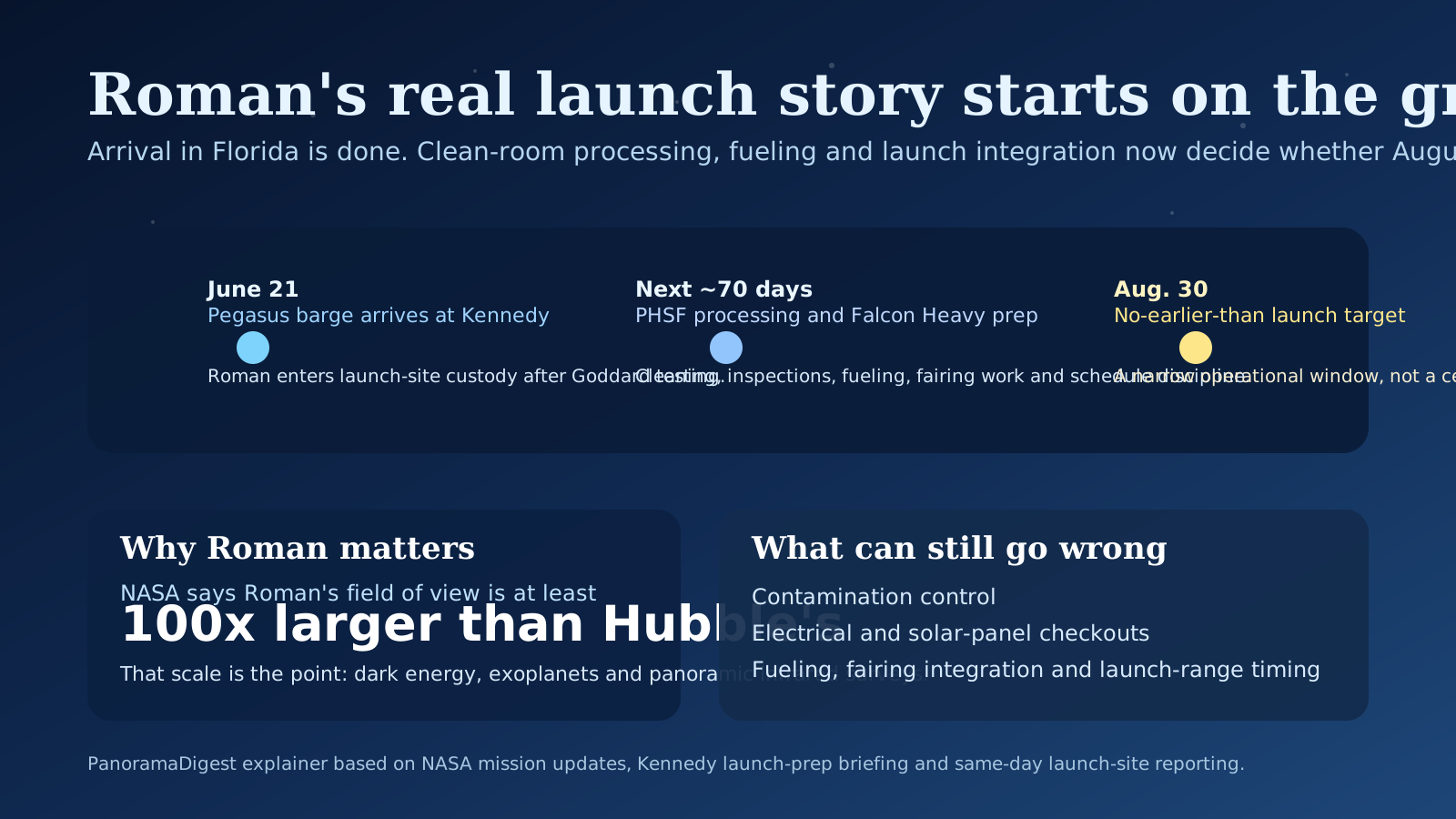
NASA's Nancy Grace Roman Space Telescope reached Kennedy Space Center in Florida on Sunday, June 21, 2026, but the real news is not the dockside arrival photo. It is the countdown that starts after the cameras leave: roughly 70 days of cleaning, inspections, fueling and launch integration that can still make or break a mission NASA wants to launch no earlier than August 30 aboard a SpaceX Falcon Heavy.
NASA — NASA's Roman Telescope Is Ready for Launch
NASA's official mission preview explains why Roman's wide-field design matters while the telescope moves through its final Florida processing campaign before launch.
NASA's June 21 mission update says Roman arrived at Kennedy aboard the Pegasus barge after final integration and testing at Goddard in Maryland. The observatory, which NASA says weighs nearly 18,000 pounds, was then taken to the Payload Hazardous Servicing Facility, or PHSF, for the final prelaunch stretch. Spaceflight Now reported that the telescope disembarked after weather-related delay and now faces a campaign that includes checkouts, fueling and encapsulation inside Falcon Heavy's payload fairing.
Why the Florida phase matters more than the arrival
Roman is not entering a casual storage hangar. It is moving into the clean, highly controlled part of launch preparation where aerospace programs lose time for reasons that sound mundane until they are expensive: contamination risk, electrical retests, insulation damage, solar-array verification, crane operations, and small schedule conflicts inside a crowded launch range.
NASA's Kennedy briefing from April 23 makes that point plainly. The agency upgraded the PHSF before Roman arrived because the telescope's instruments are sensitive enough that even the way people and equipment enter the clean area matters. That is the operational story here. Roman's science case is grand, but its launch window will be defended by procedure.
| Milestone | Verified status | Why it matters |
|---|---|---|
| June 21 arrival at Kennedy | Completed | Roman has left factory-style integration and entered launch-site processing. |
| June 22 move into the high bay | Planned by NASA for Monday | Teams begin hands-on inspection, cleaning and work-platform operations. |
| About 70 days of processing | Reported by Spaceflight Now | Testing, fueling and fairing integration determine whether the schedule stays intact. |
| August 30, 2026 launch target | NASA mission page lists Aug. 30 | Any slip in processing can ripple into launch-range and rocket availability. |
Roman is built for scale, not just spectacle
The telescope is worth watching because it is not another prestige observatory chasing pretty pictures alone. NASA's mission overview says Roman's field of view is at least 100 times larger than Hubble's. That changes the kind of astronomy it can do. Hubble excels at exquisite narrow looks. Roman is designed to sweep, count and compare on a much larger statistical scale, from dark energy and dark matter work to exoplanet surveys and wide infrared mapping.
That is also why this launch campaign deserves more scrutiny than the average space-calendar item. Roman does not only need to fly. It needs to fly clean, cold, protected and on time enough to preserve the scientific cadence NASA has spent years building toward. PanoramaDigest readers have already seen how launch logistics can become the real story in pieces such as our Ariane 6 Amazon Leo analysis and our Dragon splashdown coverage. Roman belongs in that same category: the headline object matters, but the systems around it matter more.
What to watch before launch day
The next meaningful signals are practical, not cinematic. Watch for whether NASA keeps the August 30 target, whether the PHSF work stays quiet, and whether Falcon Heavy integration proceeds without range or payload surprises. If those boxes stay checked, Roman can move from being a long-promised flagship to being a live mission with real countdown pressure.
Watch NASA's official Roman launch-preview video on YouTube if you want the mission's science case in the agency's own language while the Florida processing phase unfolds.
Reader Sentiment & Impact Pulse
How do you evaluate the primary outcome of this development?
Select an option to cast your perspective. Responses are anonymous and aggregated in real time.
Key Context & Frequently Asked Questions
NASA's Nancy Grace Roman Space Telescope reached Kennedy Space Center on June 21, 2026. The bigger story is the 70-day stretch of contamination control, testing, fueling and launch integration that now decides whether the August 30 target holds. This analysis from PanoramaDigest examines primary documentation, operational implications, and broader institutional impacts across technology & science.
Read Next
Related Stories

Leaked Apple Silicon Benchmarks Point to Massive Graphics Performance Gains in M5 Ultra and M6 Chips
Leaked benchmark testing reported by MacRumors highlights significant graphics and computational advancements for Apple's upcoming M5 Ultra and M6 silicon, signaling a major leap for on-device AI and workstation performance.
Smart TV Data Tracking Prompts Heightened Privacy Concerns as Consumers Seek Mitigation Strategies
Modern smart televisions routinely monitor viewing habits and collect consumer data through Automatic Content Recognition technology. However, targeted network adjustments and privacy settings offer users practical avenues to limit telemetry and reclaim control over their living room data.

Apple Hardware Executive Details Engineering Strategy for Foldable iPhone Durability and Crease Elimination
In an interview highlighting material science breakthroughs, Apple's hardware leadership discussed the hinge design, display elasticity, and structural longevity engineered for foldable form factors.