U.S.-China $30 Billion Tariff Plan: Goods Covered and Details Still Missing
The White House names goods worth $30 billion in each direction. Neither government's summit summary supplies the product codes, new duty rates or start date needed to calculate shipment-level savings.
The U.S.-China tariff plan announced after Xi Jinping's September 23-25, 2026 state visit concerns $30 billion worth of goods in each direction, according to the White House. That means $60 billion in combined covered trade value, not $60 billion in tariff savings. The two governments' summit summaries do not supply a product-code schedule, new duty rates or an effective date from which a business could calculate a particular shipment's savings.
That distinction matters more than the size of the headline number. A commitment to improve tariff treatment can create an opening for importers and exporters without yet telling them what a shipment will cost.
Which goods did the White House name?
The White House's September 25 fact sheet describes agreement on recommendations for more favorable treatment of non-sensitive goods through the bilateral Board of Trade. It identifies the following groups, rather than publishing a line-by-line customs schedule.
| Direction | Announced trade value | Examples named by the White House |
|---|---|---|
| United States to China | $30 billion | Agricultural goods; fish and seafood; logs and wood products; cosmetics; medical devices |
| China to United States | $30 billion | Small appliances; toys; holiday decorations; children's car seats |
| Both directions combined | $60 billion | PanoramaDigest calculation: $30 billion plus $30 billion, not a duty-revenue estimate |
A retailer reading the reference to toys, for example, cannot determine from this summary alone whether every toy it imports would qualify. Nor does the dollar figure establish how much of any eventual reduction would reach shoppers. Those are separate questions from the value of goods covered.
How the two governments describe the commitment
China's September 26 summary of eight deliverables calls it a reciprocal tariff-reduction arrangement and says the leaders instructed implementation of the economic and trade outcomes. The U.S. account uses the narrower formulation of consensus on recommendations for favorable treatment.
Read together, the statements document a political commitment. They are not interchangeable with the detailed instructions that would establish the treatment of a specific product. Neither summary provides enough information to calculate a new landed cost. This comparison is limited to those two published summaries; it is not a finding that no separate implementing document exists.
Four details that make the announcement usable
- The exact product schedule. A named category is a starting point; a product code and any exclusions identify the goods actually covered.
- The applicable rates. A trade-value total does not state either the current duty or its replacement. Without that difference, the announcement cannot yield a dollar estimate of savings.
- The effective date and treatment of shipments already moving. Timing determines which transactions a change could affect. The summit summaries do not answer that question.
- The relationship to other measures. The summaries do not explain, product by product, how favorable treatment would interact with other duties or restrictions.
For context on that last distinction, PanoramaDigest's report on small businesses challenging Section 301 tariffs covers a separate dispute over trade measures. The summit announcement should not be read as an answer to the legal claims in that case.
Tariffs are not the whole relationship
The White House also says work on rare-earth and critical-mineral supply concerns continues. It does not present the tariff announcement as a blanket resolution of those concerns. Our earlier report on China's export controls and U.S. defense supply chains explains why restrictions on exports are a distinct issue from duties on imports.
Separately, both governments describe a new bilateral channel for incidents involving AI and a planned dialogue. Their labels differ: the U.S. statement calls it a super-intelligence dialogue with the next exchange by November 2026; the Chinese statement calls it an AI dialogue with the next exchange in November. The two summaries do not describe this as a shared technical rulebook.
The practical reading: the announcement identifies a substantial trade-policy commitment and some intended product groups. A reliable claim about a particular shipment's tariff reduction still requires the relevant product schedule, rates and implementation terms. The headline dollar amount cannot substitute for them.
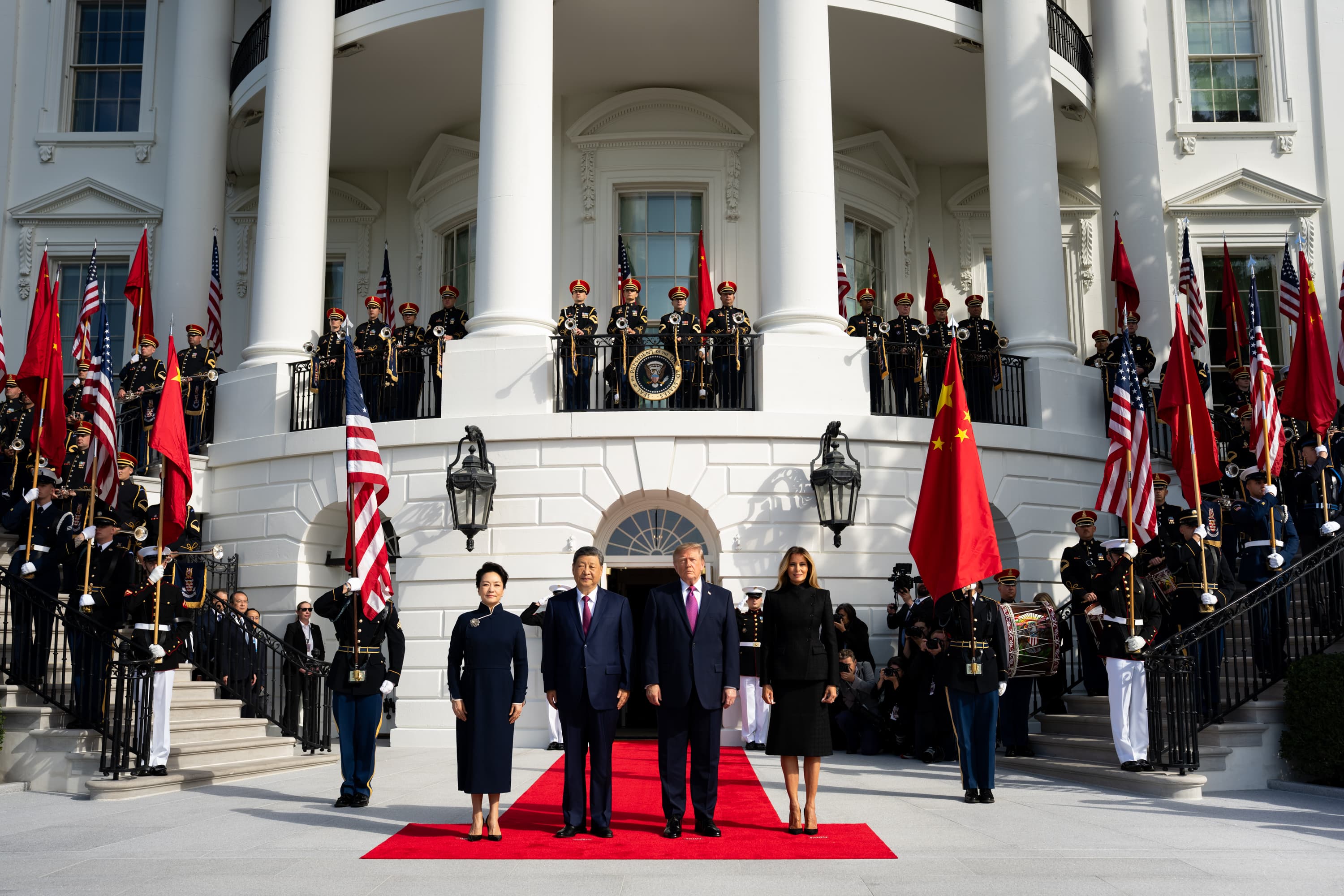
Reporting basis: the linked U.S. and Chinese government statements, compared directly. The $60 billion figure is arithmetic using the White House's two $30 billion directions. Cover: the September 24 welcome ceremony, an official White House photograph by Andrea Hanks, published in the White House's state-visit recap. The photo documents the visit, not implementation of tariff changes.
Read Next
Related Stories

EU Greenwashing Rules Start September 27: How to Check Labels and Guarantees
A practical guide to the EU rules applying from September 27: environmental claims, certification labels, GARAN guarantees and the limits of old-stock flexibility.
U.S. and Japan Buy Yen Together as Dollar Falls From 163 to 156
Japan confirmed coordinated yen buying with the U.S. after the dollar traded above 163 yen. The intervention amount will be disclosed later.
OPEC+ Raises September Oil Production Target by 188,000 Barrels a Day
Seven OPEC+ countries raised their combined September production target by 188,000 barrels a day, bringing the published required total to 31.01 million.