ADHD's Link to Chronic Pain Is Getting Harder for Clinicians to Ignore
A June 14, 2026 burst of fresh reporting pushed an old blind spot back into view: adults with ADHD traits keep showing up disproportionately in chronic-pain research, and the best new evidence suggests the overlap may run through anxiety, depression and catastrophic pain thinking as much as through pain itself.
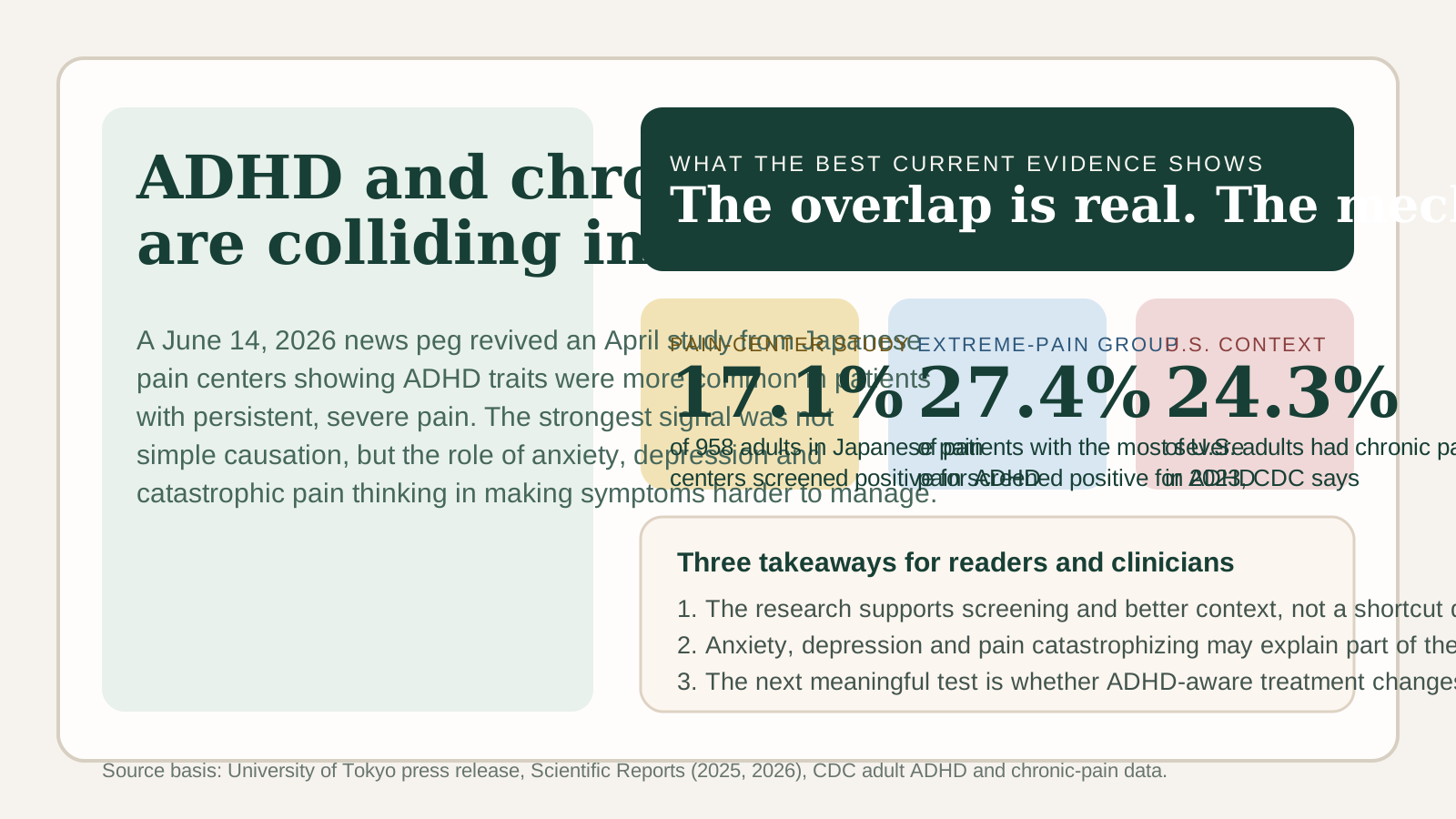
The June 14, 2026 reporting cycle brought an overlooked health question back into plain view: why do ADHD traits keep appearing so often in chronic-pain research? The immediate news peg was fresh coverage from The Washington Post, but the stronger evidence sits in the primary literature. In an April 23, 2026 Scientific Reports study involving 958 adults who arrived at multidisciplinary pain centers in Japan after standard care had not resolved their symptoms, researchers found that 17.1% screened positive for ADHD and that the rate climbed to 27.4% among patients with extremely severe pain. The authors did not argue that ADHD simply causes chronic pain. They argued something more clinically useful: ADHD symptoms were tied to worse pain severity, and a meaningful part of that relationship appeared to run through anxiety, depression and pain catastrophizing.
The companion University of Tokyo research release described the connection as solid but indirect. That phrasing matters. It keeps the story out of the false binary that often distorts health reporting, where one paper is either a miracle explanation or nothing at all. Here, the evidence is narrower and more credible than that. The paper says clinicians treating persistent pain should stop assuming they are looking at a purely musculoskeletal problem when inattention, impulsivity, emotional dysregulation and untreated mental-health strain may be part of the same burden.
| Question | What the primary sources show | What readers should not overclaim |
|---|---|---|
| How strong is the overlap in the new pain-center study? | The 2026 Scientific Reports paper found 17.1% ADHD screening positivity across 958 adults with persistent chronic pain, rising to 27.4% among those with extremely severe pain. | A screening result is not the same thing as a formal diagnosis, and the study does not prove ADHD caused the pain. |
| What seems to explain part of the connection? | The authors found that anxiety, depression and pain catastrophizing weakened the raw ADHD-pain association once they were included in the model. | That does not mean the relationship is only psychological; it means the pathway is more layered than a single-cause story. |
| Is this just one isolated paper? | A 2025 Scientific Reports survey of 4,028 adults in Japan also found ADHD symptom positivity rose with pain intensity, with 38.3% positivity in the chronic-pain group reporting the most extreme pain. | Both studies are observational and based in Japan, so they strengthen the signal without settling every question about causation or generalizability. |
This matters because both conditions are already common enough to collide in ordinary care
The public-health backdrop is not small. According to the CDC's 2024 MMWR report on adult ADHD diagnosis and treatment, an estimated 15.5 million U.S. adults had a current ADHD diagnosis in 2023, and more than half were first diagnosed in adulthood. Separately, the CDC's 2024 chronic-pain data brief said 24.3% of U.S. adults had chronic pain in 2023 and 8.5% had high-impact chronic pain that frequently limited life or work activities. When two high-prevalence conditions overlap, the biggest risk is often not dramatic misdiagnosis. It is quieter than that. Patients get treated for one layer of the problem while the other keeps sabotaging sleep, adherence, pacing, therapy follow-through or the ability to describe what is happening clearly.
That is where the new research earns real attention. ADHD in adults is often discussed as a productivity, school or medication-access story. Chronic pain is often discussed as an orthopedic, neurologic or rheumatologic story. The Japanese papers suggest some patients are living in the seam between those frameworks. If a clinician sees only pain, the executive-function strain may be missed. If a clinician sees only ADHD, the pain burden may get reduced to stress or personality. Neither shortcut is good medicine.
The next step is better treatment design, not another round of internet certainty
The University of Tokyo team was explicit about what should come next: prospective and interventional studies that test whether identifying and treating ADHD more deliberately can reduce pain severity or improve rehabilitation outcomes. That is the right next question. It is also the one that keeps this story honest. An observational link can change clinical suspicion before it changes practice standards. For now, the safest conclusion is that the overlap is too persistent to dismiss and too complex to flatten.
That may sound less satisfying than a headline cure, but it is more useful. Health readers are already inundated with one-step explanations for messy chronic conditions. This research argues for a tougher and smarter habit: when pain lingers, look harder at the cognitive and emotional load traveling with it. That does not make ADHD the answer to chronic pain. It makes it one of the questions clinicians may need to ask sooner.
For further reporting on this subject, see our Public Health coverage.
Read Next
Related Stories

2026-27 Flu Vaccine Match: Why Lab Results Are Not an Effectiveness Rate
Early CDC testing finds encouraging recognition of sampled flu viruses. The denominators explain why those results cannot tell you a vaccine's real-world protection rate.
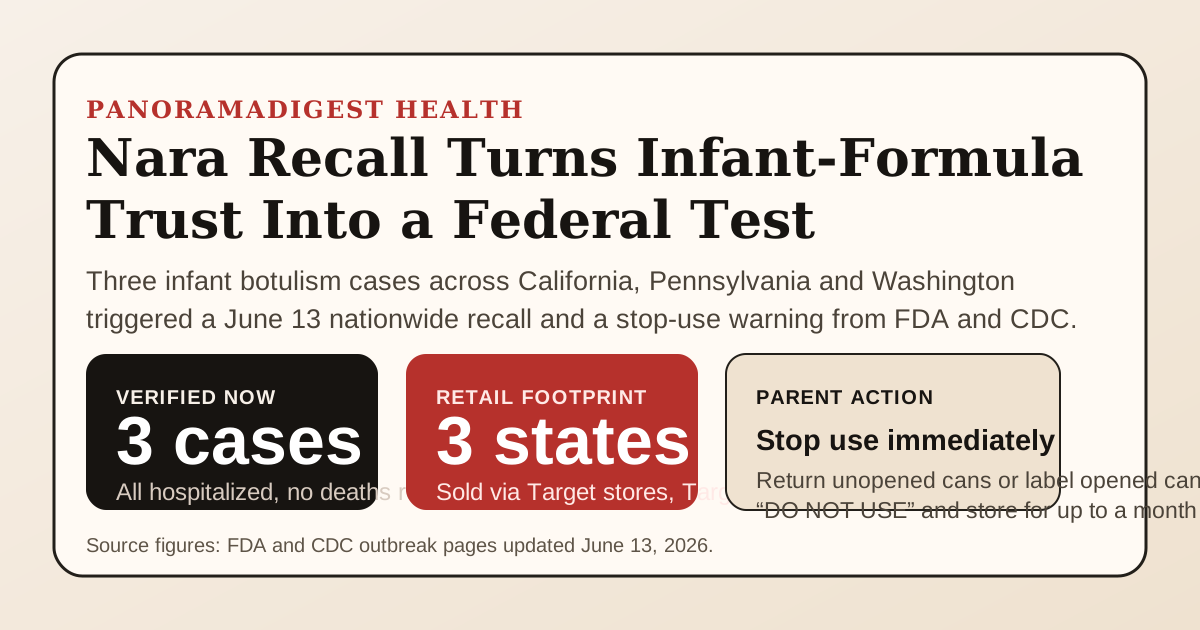
Nara Formula Recall: FDA Investigation and Infant-Safety Guidance
Nara Organics' nationwide recall after three infant botulism cases did not threaten U.S. formula supply, but it did show how quickly a premium trust story can collapse once CDC and FDA warnings replace marketing language.
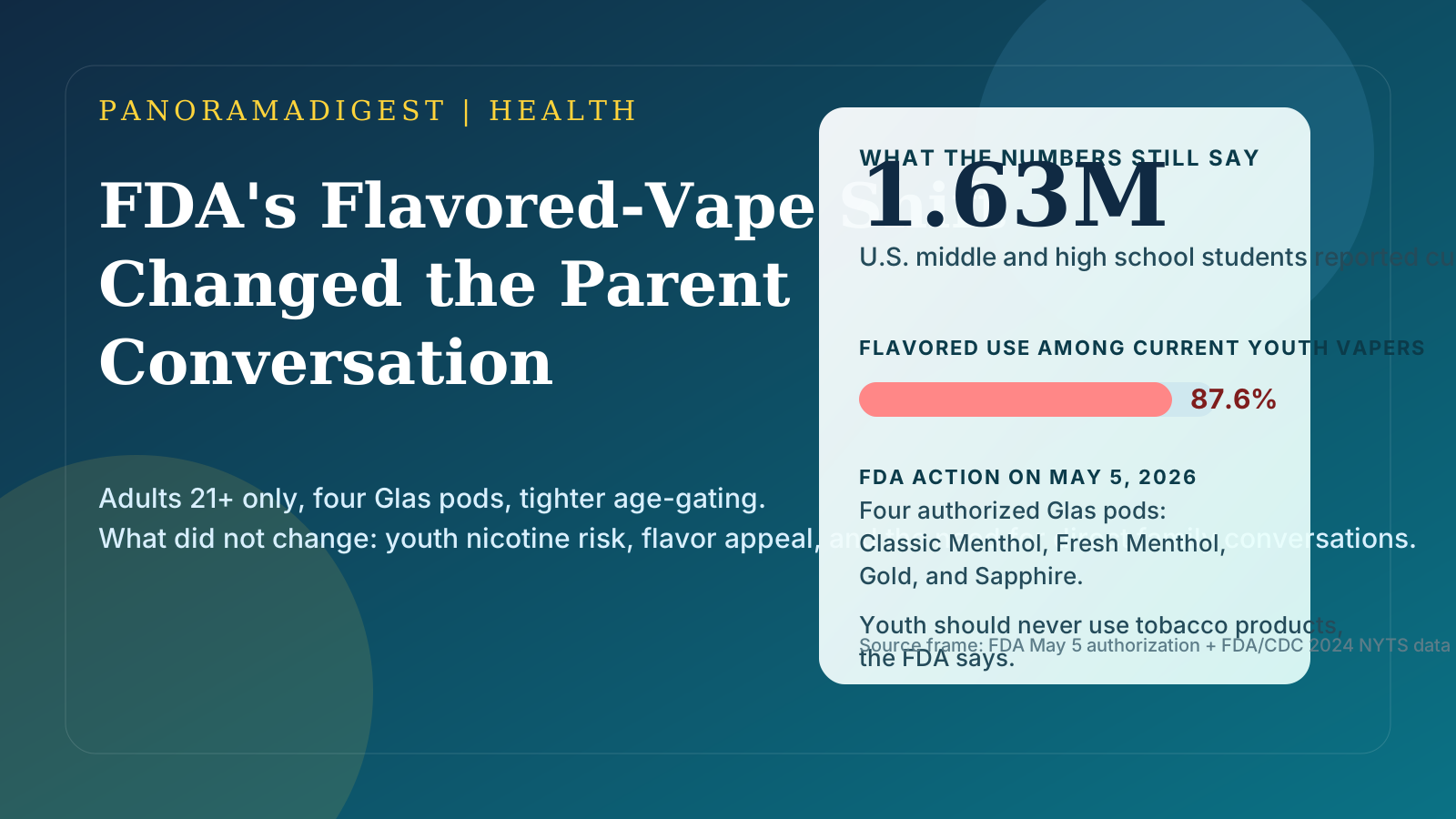
FDA's Flavored-Vape Shift Changed the Parent Conversation, Not the Youth Risk
The FDA's adult-only authorization of four Glas vape pods did not erase the core family problem: youth vaping is down from its peak, but it remains common, overwhelmingly flavored and deeply tied to nicotine dependence. That is why the smarter response at home is a calm, specific conversation about nicotine, not a one-night panic speech.