Elevance Pays $342 Million After CMS Medicare Advantage Sanction Threat
Elevance's $342 million repayment matters less as a headline penalty than as a test of whether CMS can finally make Medicare Advantage overbilling expensive in real time.
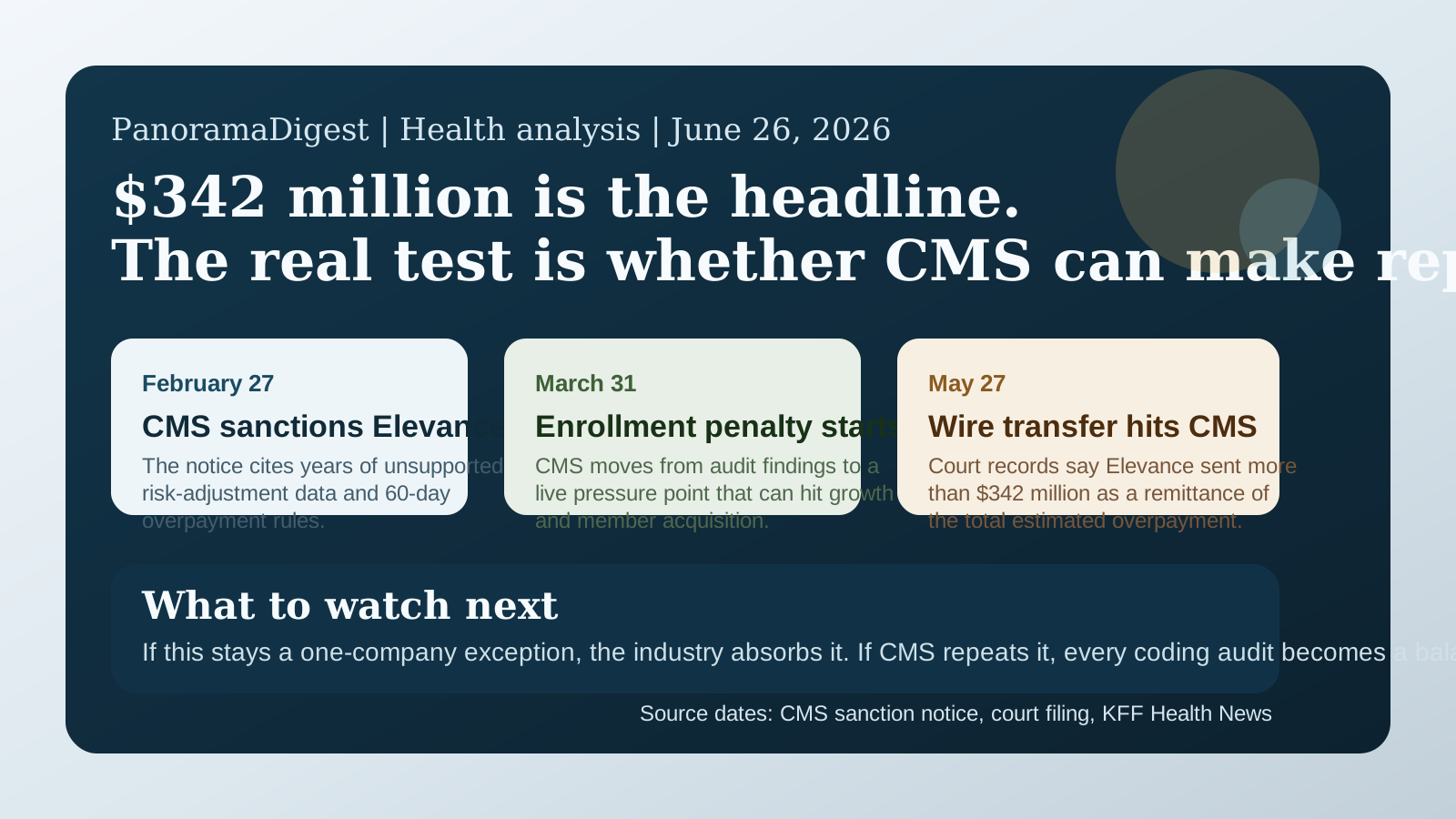
Elevance Health's decision to send more than $342 million to the federal government looks, at first glance, like a clean accountability moment. It is not. What matters on June 26, 2026, is that the payment came only after CMS threatened to suspend enrollment and marketing across dozens of Medicare Advantage contracts, and only after years of fights over unsupported diagnosis codes that can raise federal payments when plans make patients look sicker on paper than the medical record can prove.
KFF Health News reported that Elevance wired the money on May 27 and that government lawyers disclosed the transfer in a June 22 court filing. The company, which covers roughly 2 million people on Medicare, described the transfer as a remittance of the total estimated overpayment amount. That phrasing matters. This is not a triumphant policy finish line. It is a forced payment inside a broader argument about how hard CMS is willing to push a powerful insurer when auditors say the coding was wrong.
The government finally used a lever that hurts now, not years later
The most consequential fact in the CMS notice is not the dollar figure. It is the agency's explanation of why it imposed sanctions in the first place. In the February notice, CMS said Elevance had spent years failing to correct unsupported risk-adjustment data through the required electronic systems, even after repeated instructions, and had continued certifying the accuracy of submissions while the disputed diagnosis codes remained unresolved. The notice says the conduct stretched from November 13, 2018, through October 10, 2025, covered payment years 2016 through 2024, and implicated the 60-day rule that requires identified overpayments to be reported and returned promptly.
That is why the March 31 sanction date matters more than the headline cash transfer. Medicare Advantage plans can usually survive a long legal argument. They are less comfortable when CMS threatens enrollment growth and member communications in real time. A regulator that can slow customer acquisition has more leverage than one that simply writes another memo. This is the rare case in which CMS appears to have made the cost of delay immediate enough to move money.
Why this case lands differently inside Medicare Advantage
Medicare Advantage is no fringe corner of the program. KFF's 2026 enrollment update says more than 35 million people, about 55% of Medicare beneficiaries, are now enrolled in private Advantage plans. That scale helps explain why coding fights matter so much. When diagnosis data are accurate, the program is paying plans to manage patients with real clinical complexity. When diagnosis data are padded, taxpayers are financing revenue that does not reflect the chart.
Researchers and investigators have been warning about this for years, but collection has lagged. The same KFF Health News report notes that experts could not recall another instance in which CMS pushed a Medicare Advantage plan to repay this much through its own enforcement muscle. The contrast is revealing. Whistleblower litigation has produced large settlements, including the Justice Department's January 2026 Kaiser Permanente case. CMS itself has too often looked slower, narrower, or easier to outwait.
A repayment this large does not prove the cleanup is durable
There is an easy way to overread this episode: treat the $342 million as proof that the government has turned the corner on Medicare Advantage oversight. The harder reading is more realistic. One compelled repayment does not tell seniors whether coding incentives have changed across the market. It does not tell clinicians whether chart reviews will become cleaner or simply more defensive. And it does not tell taxpayers whether CMS will use the same sanction playbook against the next plan that tests the rules.
That uncertainty is exactly why the Elevance story deserves more than a settlement-sized headline. If CMS keeps using enrollment sanctions when plans fail to correct unsupported diagnosis codes, the industry's calculus changes. If this remains an outlier, the signal fades and the lesson for competitors is mostly procedural: fight until the pressure becomes unusual.
What patients, doctors and taxpayers should watch next
| Date | What happened | Why it matters |
|---|---|---|
| February 27, 2026 | CMS issued its sanction notice to Elevance. | The agency tied the case to unsupported diagnosis codes, data-certification duties and the 60-day overpayment rule. |
| March 31, 2026 | The enrollment and communications sanctions took effect. | CMS moved the dispute from audit language into operational pressure. |
| May 27, 2026 | Elevance sent more than $342 million to CMS. | The payment showed that sanctions can produce faster cash recovery than years of passive dispute. |
| After June 22, 2026 | Court records made the transfer public. | The next test is whether CMS repeats this approach elsewhere, not whether one case generated a headline. |
For patients, the immediate benefit is indirect: stronger pressure on plans to keep coding honest. For doctors, the signal is that documentation integrity is no longer a background compliance issue. For taxpayers, the question is brutally simple. Was this a one-time scare for one insurer, or the start of a regulator finally learning how to collect while the money still matters?
If CMS wants the answer to be the second one, it has to make this case look ordinary. That would be the real reform story.
Continue reading: Indiana Hospital Price Cap: Employer Health Plans and Negotiations.
Read Next
Related Stories

2026-27 Flu Vaccine Match: Why Lab Results Are Not an Effectiveness Rate
Early CDC testing finds encouraging recognition of sampled flu viruses. The denominators explain why those results cannot tell you a vaccine's real-world protection rate.
WHO Pregnancy-Hypertension Roadmap: Priorities Through 2035
WHO’s October 8 roadmap connects pregnancy-hypertension research, clinical standards and access to care. Here is what its figures and five priorities actually measure.

UK Sugar Rationing Study Links the First 1,000 Days to Lower Dementia Risk
A UK Biobank natural experiment linked sugar rationing during the first 1,000 days to lower later-life risks of dementia, Alzheimer's disease, depression and anxiety, but it does not prove causation.